
Why Personal Branding Matters More Than Ever in London
London has always been a city that rewards visibility. Walk into any founder event in Shoreditch, Canary Wharf, or the King’s Cross tech corridor and you will quickly notice something: the people who attract the most attention are rarely the ones with the most impressive pitch decks. They are the ones with a clear point of view, a recognisable story, and a reputation that precedes them. That is the power of a well-built personal brand, and in 2026 it matters more than ever.
The London founder ecosystem is more competitive than at any point in recent memory. You are operating in a city with thousands of startups, a growing pool of venture capital, and a professional services sector that now spans every imaginable niche. Investors receive hundreds of pitch emails every month. Journalists get dozens of press requests a week. Potential hires scroll through LinkedIn for hours before deciding who to work with. In that environment, being quietly excellent is no longer enough. You need people to know your name before you walk into the room.
Personal branding for entrepreneurs is about building trust at scale. It is the process of communicating who you are, what you stand for, and why your perspective is worth listening to. When done well, it turns you into a magnet for the right opportunities, the right people, and the right conversations. When done poorly or ignored completely, it leaves you chasing attention that others attract effortlessly.
Books remain one of the most underrated tools for shaping a strong personal brand. Not because reading alone transforms anything, but because the right book at the right moment can reframe how you see yourself and how you present yourself to the world. The books below were chosen because they are practical, grounded, and genuinely useful for founders at any stage. Each one contains something you can apply immediately.
Here are seven personal branding books for founders that belong on your shelf in 2026.
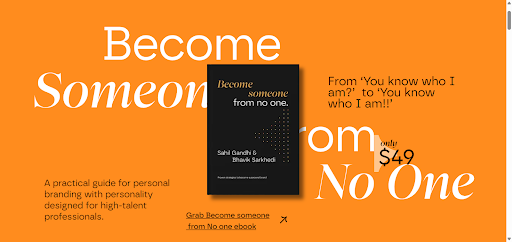
1. Become Someone From No One by Sahil Gandhi and Bhavik Sarkhedi
The Most Practical Starting Point for Founder Branding Strategy
If you are looking for one book to start your personal branding journey as a founder, this is it. Become Someone From No One is an e-book built on years of hands-on work with founders, executives, and professionals through Ohh My Brand and Blushush, two agencies that have developed a strong reputation for founder-led branding. It reads like advice from someone who has already made the mistakes so you do not have to.
What makes it stand out is its focus on a very common but rarely discussed problem: the gap between who a founder really is and how they present themselves publicly. Most founders downplay their stories. They strip out the texture, the setbacks, the formative moments that actually make them interesting and worth following. This book addresses that directly and shows you how to stop holding your own story back.
One of the most valuable exercises in the book involves identifying defining life moments and using those moments to shape your brand voice. It sounds simple. In practice, it shifts everything. When you write from a place of genuine experience rather than polished corporate messaging, your LinkedIn content lands differently, your interviews carry more weight, and your overall messaging becomes far more cohesive.
The book includes real examples that illustrate its principles clearly. A freelancer who added personal perspective to their content saw meaningful improvement in organic traffic and inbound enquiries. A founder who began sharing early career experiences in their messaging noticed that trust with potential investors and clients was established much faster than before. These are not hypothetical results. They reflect the actual experience of people who followed the framework.
Practically, the book delivers templates for LinkedIn posts, content plans, and visibility systems that keep the process structured and consistent. For busy founders who struggle to maintain any kind of content rhythm, having a system makes the difference between showing up occasionally and showing up in a way that actually builds momentum.
For London founders trying to build their brand in a city full of noise, Become Someone From No One provides the clearest possible starting point.
Practical takeaway:
Write down three defining moments from your career or life that shaped how you think. Use those moments as the foundation for your next three pieces of content. Watch what changes.
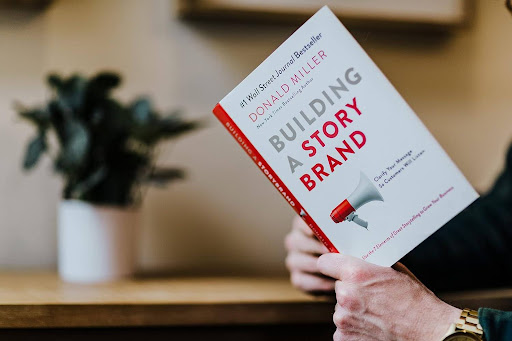
2. Building a StoryBrand by Donald Miller
Clarify Your Message So Customers Listen
Donald Miller wrote Building a Story Brand to solve one of the most common problems in business communication: confusion. Most founders talk about what they do in ways that make perfect sense to them and make very little sense to anyone else. The book introduces a framework called the SB7 framework, which uses the structure of classic storytelling to help you clarify your message.
The core idea is that in any good story, the customer is the hero and you are the guide. Founders who position themselves as the hero of their own narrative tend to create a subtle disconnect with their audience. Founders who position themselves as experienced guides who can help customers achieve something meaningful tend to build far stronger connection and trust.
For London founders building their personal brand, this book is particularly relevant for website copy, speaking bios, LinkedIn summaries, and any situation where you need to explain what you do quickly and clearly. The StoryBrand approach cuts through jargon and forces you to get specific about the problem you solve and the transformation you offer.
Practical takeaway:
Rewrite your LinkedIn About section using the SB7 structure. Identify the problem your audience faces, position yourself as the guide with a plan, and describe the transformation they experience when they work with you. Keep it to three short paragraphs.
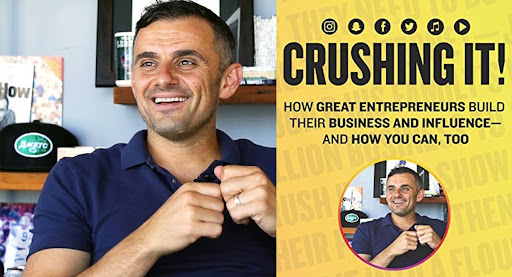
3. Crushing It by Gary Vaynerchuk
Turn Your Expertise Into a Platform That Works for You
Gary Vaynerchuk is a divisive figure in the personal branding world, but Crushing It earns its place on this list because of its practical depth. The book is a thorough guide to using social platforms to build a personal brand around your expertise, your story, and your authentic self. What sets it apart from earlier books on the same topic is its use of real case studies from people outside the usual tech entrepreneur mould.
For a London founder in 2026, the most relevant sections cover how to choose the right platforms for your audience, how to create content that reflects genuine expertise rather than surface-level opinions, and how to maintain a consistent presence without burning out. The book also challenges the idea that you need to be everywhere at once. Focus on one or two platforms where your audience actually lives, do the work consistently, and the results will follow.
The underlying message of Crushing It is one that resonates strongly with the personal branding for entrepreneurs conversation: your story and your perspective are your most valuable assets. Document the journey rather than performing a version of it for an imagined audience.
Practical takeaway:
Commit to one platform for ninety days. Post four to five times per week with content that reflects your actual knowledge and experience. Review the results at the end of the period before deciding whether to expand to additional channels.
4. Show Your Work by Austin Kleon
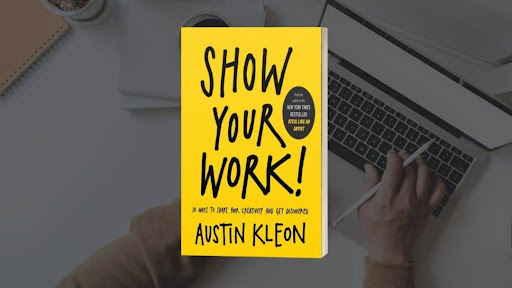
Build a London Founder Brand by Sharing the Process
Austin Kleon wrote Show Your Work as a guide for people who want to be discovered but feel uncomfortable with self-promotion. If that sentence describes you, this book will change how you think about sharing your work publicly.
The central insight is straightforward: you do not have to be a finished product to start sharing. Most founders wait until everything is polished, the product is launched, the numbers are impressive, and the story has a tidy arc. By that point, they have missed months or years of relationship-building opportunities. Kleon argues that sharing the process, the thinking behind decisions, the iterations, the questions you are working through, is often more valuable and more engaging than sharing the finished result.
For founders trying to build their personal brand in London, this approach has a specific advantage. London audiences, whether investors, clients, or collaborators, tend to respond well to founders who are thoughtful and transparent about how they work. Show Your Work gives you a simple framework for turning that transparency into consistent, genuine content.
Practical takeaway:
Share one behind-the-scenes post this week about a decision you are currently working through in your business. Explain your thinking, not just the outcome. Notice how your audience responds compared to your usual polished posts.
5. This Is Marketing by Seth Godin
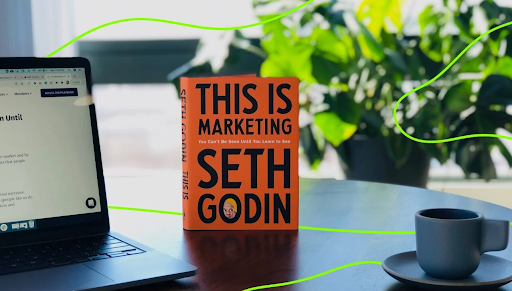
Serve a Specific Audience Rather Than Chase Everyone
Seth Godin has shaped how a generation of founders and marketers think about communication, trust, and reputation. This Is Marketing is his most complete statement of those ideas. At its heart, it is an argument for specificity: the most effective personal brands are built for a specific audience with a specific problem, not for everyone.
Godin introduces the concept of the smallest viable audience, which is the minimum number of people whose needs you need to genuinely serve to build a sustainable reputation. For founders, this reframing is powerful. Rather than trying to appeal to every potential investor or customer in London, you identify the precise group of people who most need what you offer and you build your brand in service of them specifically.
The book also makes a case that personal branding is fundamentally an act of generosity. You share your knowledge, your perspective, and your experience because it creates genuine value for others. That orientation shifts the entire enterprise from self-promotion to service, which makes it both more sustainable and far more effective.
Practical takeaway:
Write a one-paragraph description of the specific person your personal brand is built for. Name their role, their biggest challenge, and what they most need to hear from you. Use that description as a filter every time you create new content.
6. The Brand Called You by Tom Peters
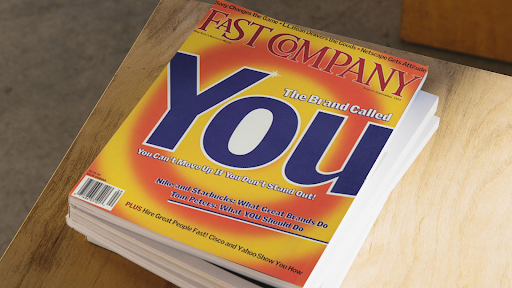
The Original Blueprint for Professional Personal Branding
Tom Peters introduced the phrase personal brand to the mainstream business conversation back in 1997 with his landmark Fast Company article, which was later expanded into book form. Reading it today, the core argument still holds: in a world where organisations downsize, industries shift, and career paths become less linear, the most important asset you manage is your professional reputation.
Peters argues that every professional, regardless of role or industry, is the CEO of a company called Me Inc. The brand called you is not about vanity. It is about deliberately shaping how you are perceived so that you remain relevant, valuable, and sought after throughout your career.
For London founders in 2026, the ideas in this book feel more relevant than ever. The founder ecosystem rewards individuals who have built genuine expertise and a recognisable reputation over time. Peters provides the strategic thinking behind that process. His writing is direct, even confrontational at times, and it has a habit of making you rethink assumptions you have held for years about how professional visibility actually works.
Practical takeaway:
Answer this question in writing: What is the one thing you are demonstrably better at than almost anyone in your network? Build your next month of content entirely around that specific expertise area.
7. Known by Mark Schaefer
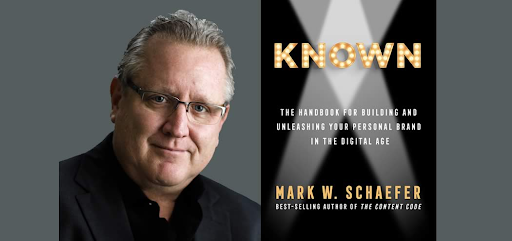
A Systematic Approach to Building Visibility in Any Industry
Mark Schaefer wrote Known with a specific question in mind: why do some people become well-known in their industry while others with equal or greater talent remain invisible? His answer is not luck or natural charisma. It is a repeatable, structured process that he breaks down into four steps: finding your area of sustainable interest, identifying the right content channel, creating consistent content over time, and developing the network connections that help that content spread.
What makes Known particularly useful for founders is the emphasis on sustainability. The people who build the strongest personal brands over time are those who have identified topics they genuinely care about, not just topics that seem commercially advantageous. Schaefer calls this your sustainable interest, and it is the foundation of everything else in his framework.
The book also includes research-backed insights into how recognition actually develops, which is helpful for founders who want to understand the psychology behind why audiences trust some voices and ignore others. For those building their personal brand in London for the first time, Known provides a clear roadmap with enough flexibility to adapt to any industry or audience.
Practical takeaway:
Map out the four elements of your Known plan. Write down your sustainable interest, your primary content platform, your posting frequency for the next six months, and three communities or networks where your ideal audience already gathers. Then start.
How to Choose the Right Personal Branding Book as a Founder
Seven books is seven different starting points, and not all of them will be equally useful depending on where you are in your journey. Here is a quick guide to help you decide where to begin.
You are just starting out and have no clear brand strategy yet.
Start with Become Someone From No One. It is the most structured and immediately applicable of the seven books on this list, and it was written specifically for people who are building from scratch rather than refining something that already exists.
Your brand exists but your messaging is unclear or inconsistent.
Building a StoryBrand is the right choice. Miller’s framework is excellent for founders who have something valuable to say but struggle to communicate it in a way that resonates with their audience.
You are trying to grow your social media presence and content output.
Pick up Crushing It or Show Your Work. Both books offer practical, platform-focused guidance with a focus on consistency and authenticity. Show Your Work is the more accessible read. Crushing It goes deeper on platform strategy.
You want a long-term strategic perspective on personal brand building.
Read Known alongside The Brand Called You. Together, they provide a strategic framework that covers both the philosophy behind personal branding and the practical systems for making it happen over time.
For founders with limited reading time, the order that tends to produce the fastest results is Become Someone From No One first, then Building a StoryBrand, then Known. That sequence gives you the personal story work, the messaging clarity, and the long-term content system you need to build your brand in a way that lasts.
Conclusion: Reading Is the Starting Point, Execution Is Everything
There is a version of personal branding advice that makes the whole thing sound effortless. Post a few times a week, share your story, be authentic, and watch opportunities roll in. Anyone who has actually built a strong personal brand from scratch in a competitive city like London knows that is not how it works.
What actually works is consistency over a long enough period that your name becomes associated with a specific area of expertise, a recognisable perspective, or a category of thinking. It requires showing up when the algorithm is quiet, when the engagement is low, and when the process feels thankless. The founders who build the strongest brands in London tend to be the ones who treat personal branding as a long-term investment rather than a short-term tactic.
Books help you build the foundation. They sharpen your thinking, provide frameworks you can test in the real world, and occasionally give you the perspective shift that changes how you see your own story. But the reading is just preparation. The execution is where the brand actually gets built.
If you are serious about building your personal brand in 2026, start with one book from this list. Apply what you learn. Then read the next one. For founders who want structured support alongside that process, agencies like Ohh My Brand and Blushush have built their entire practice around helping professionals translate their story into a brand that creates real commercial outcomes. Their frameworks, and the thinking behind books like Become Someone From No One, reflect what actually works in today’s market.
The founder branding strategy that wins in London is the one that starts today. Your story already exists. These books will help you tell it in a way the right people will remember.