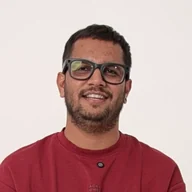
Blushush became my third exit in October 2026. It is a studio in London that does brand work, Webflow builds and AI systems. I co-founded it in 2025, and it keeps serving its clients.
I'm going all in on Solo Not Small. It is my initiative for solopreneurs and small business owners who want one person to run a business with the order of a full company. ChatGPTalker covers AI systems that do real work, so this note is about what mine do in a normal week.
Thirteen jobs, each with its own system
In a normal week I research prospects before sales calls, write proposals, welcome new clients, post on LinkedIn, keep my website current and check what Google and AI say about me. Counted properly, that is thirteen separate jobs. A small company would hire for most of them. I run each one on a Claude project with its own instructions, its own files and its own checklist.
One of the thirteen jobs in twenty-eight seconds: founders with good work that nobody can find. The fix is making sure Google and ChatGPT read the same clear facts about you, and Lesson 06 builds the system for it.
Two habits hold it together, and both sit in Lesson 02 of Solo Not Small, Claude that already knows you. The first is the morning brief. Each project already holds my files, so I open the day by telling it what matters today and what finished looks like. The second is writing a job down once. The first time I do a task by hand, I note every step, and those notes become a skill Claude follows from then on. It is the same discipline as mapping a process before you automate it, sized for one person.
A project for one job holds three things. The instructions say who the work is for, what a good result looks like and what to avoid. The files hold my past proposals, my one line and the facts I repeat often. The checklist is what I read before anything goes out. When a job changes, I edit the project once, and every run after that follows the new version.
| # | The job | Lesson that builds it |
|---|---|---|
| 01 | Deciding which work needs a person | Lesson 01, Solo, not small |
| 02 | A morning brief for AI | Lesson 02, Claude that already knows you |
| 03 | One sentence on what I do | Lesson 03, Your one line |
| 04 | Posts that turn into work | Lesson 04, LinkedIn that brings work |
| 05 | Putting a website live | Lesson 05, Your website, live this weekend |
| 06 | Showing up right on Google and AI | Lesson 06, Look like the expert when they search you |
| 07 | Bylines where clients read | Lesson 07, Get published where your clients read |
| 08 | Getting the same output every time | Lesson 02, Claude that already knows you |
| 09 | Ads that earn back their cost | Lesson 08, Leads that come to you |
| 10 | Charging for results instead of hours | Lesson 10, Price the result |
| 11 | Research before each sales call | Lesson 09, Proposals the same day |
| 12 | Writing a proposal within a day | Lesson 09, Proposals the same day |
| 13 | Onboarding a new client | Lesson 09, Proposals the same day |
Where I still decide
The systems take the repeat work. The judgment calls stay with me: which client to take, what a proposal should promise, when a post is ready to go out. Teams face the same question at a larger scale, and this guide on keeping people skilled when machines do the work covers it well.
I also check the output on a schedule. Once a week I read one sample from each system, such as a proposal, a post or a research note. If something has drifted, I correct the instructions rather than the single piece of work, so the next run starts right.
If your business runs on you alone, start with one job you repeat every week. Picking the first process to automate is a sensible first read, and a short written automation brief helps even when the only builder is you.
The recordThis makes three bootstrapped exits for me: Blushush in October 2026, Write Right in 2023 and Dad of Ad in 2021.
Solo Not Small has ten lessons and one working system per job. The line on its homepage is one I try to keep every week: learn AI, but also live.
Ten lessons, one working system each
Solo Not Small is where I teach the systems I run my own week on.
Go to solonotsmall.com →Questions about the AI side
What is Bhavik Sarkhedi doing after Blushush?
Solo Not Small. I'm going all in on it: ten lessons for solopreneurs and small business owners, and each lesson gives you a working system for one job, built in Claude.
Which AI tool does Bhavik Sarkhedi use to run a one-person business?
Claude. Each of my thirteen jobs has its own Claude project with instructions, files and a checklist, and the jobs I repeat are written down as skills that Claude follows the same way every time.
What do I need to start Solo Not Small?
A laptop and a paid Claude plan. Every lesson comes with the recorded lesson, the system file you load into your own Claude, and my templates.